


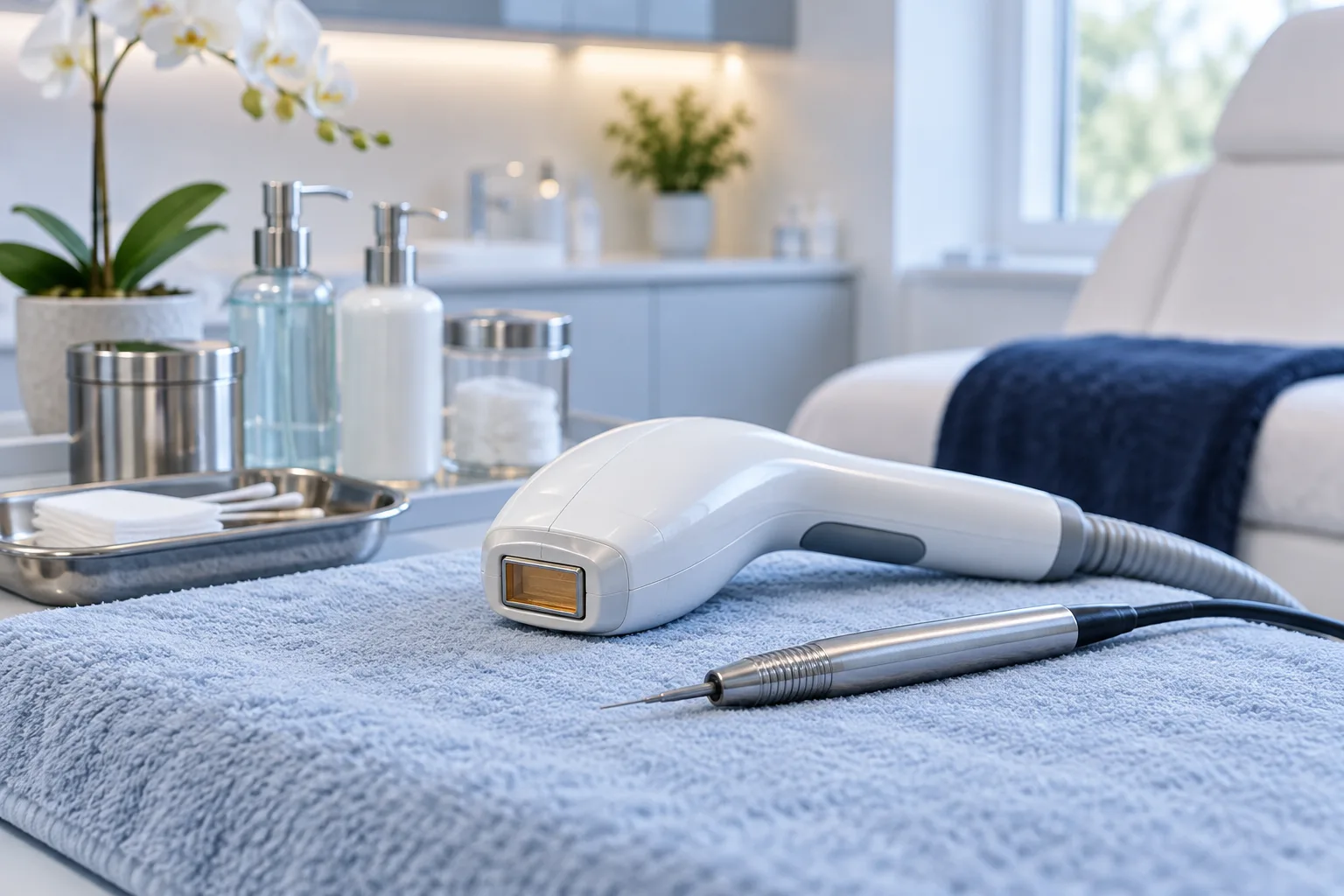
At our CQC-registered clinic, laser treatment runs under the oversight of our Consultant Dermatologist, Dr Mark Hudson-Peacock, who is our Laser Protection Supervisor, alongside experienced laser practitioners and electrolysis therapists. Patients travel to us from across Kent, including Canterbury, Whitstable, Herne Bay, Faversham, Ashford, Folkestone, Dover and Deal. Our aim is to find the method that suits you, whether that is laser hair removal, electrolysis or a combination of both.
About the Condition
Excess facial hair can affect the upper lip, chin, jawline and neck. It has a range of possible causes, including genetics, hormonal changes, some medications and medical conditions such as polycystic ovary syndrome, and sometimes no cause is identified.
Common concerns include:
- Coarse or dark hair growth on the upper lip, chin or jawline
- Hair growth that has increased or changed recently
- Ingrown hairs from repeated shaving, plucking or waxing
- Hair that has not responded well to home hair removal
- Hair growth that is affecting your confidence
Different hair types need different approaches. Darker, coarser hair is usually well suited to laser, while fine or light hair may be better treated with electrolysis. Because hair grows in cycles, both methods need a course of sessions, and only actively growing hairs can be treated at each visit.
Frequent shaving, plucking or waxing can lead to ingrown hairs, and our page on ingrown hairs explains how these can be managed alongside hair removal.
How We Treat It
Treatment starts with a consultation and patch test, where we look at your hair colour, skin tone and preferences and check how your skin responds. We then recommend the method, or combination of methods, that suits you. Treatment commonly covers the upper lip, chin, jawline and neck, and your plan is tailored to the area and the density of your hair growth.
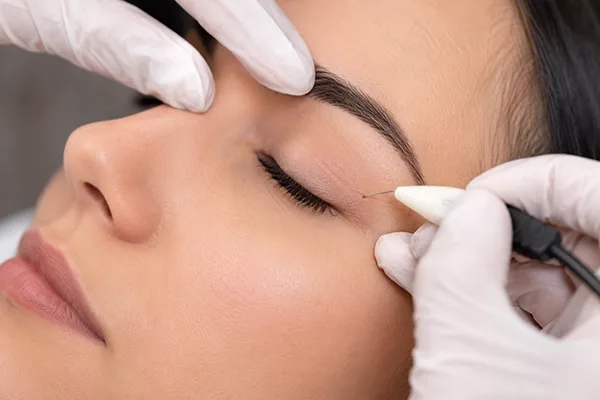
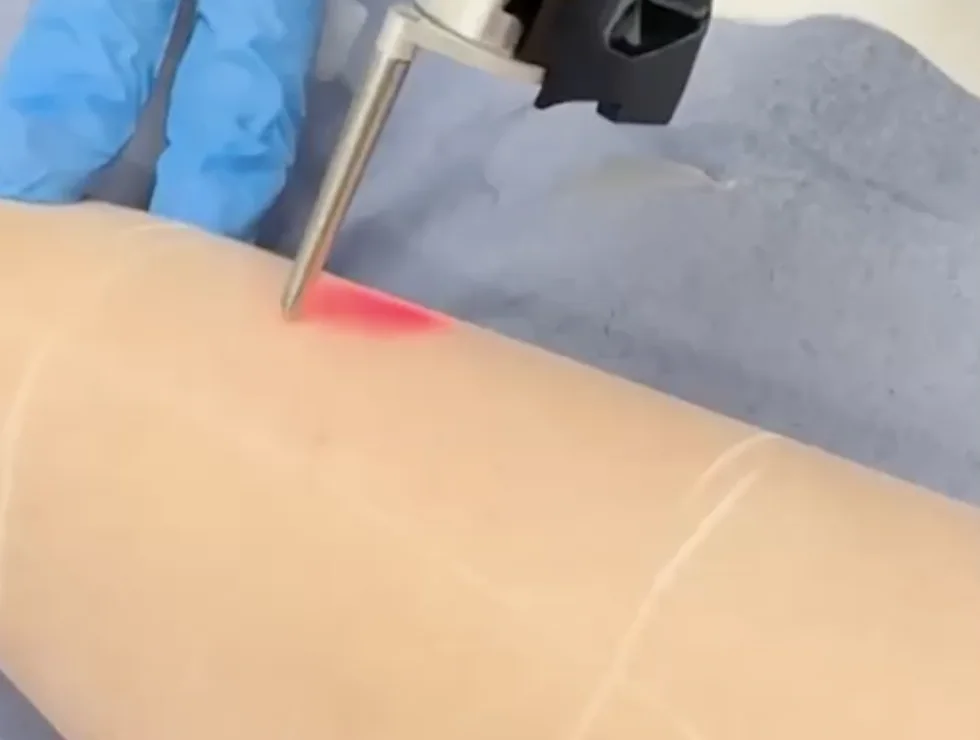
Laser hair removal, delivered with a Class 4 Alexandrite laser under Dr Hudson-Peacock’s oversight, works well for darker, coarser hair and treats larger areas efficiently over a course of sessions. Electrolysis treats each hair follicle individually, is suitable for all hair colours and skin types, and can treat fine or light hair that laser cannot always target.
Electrolysis is used for long-lasting hair removal once a full course is completed. Laser offers a long-term reduction in hair growth, though some maintenance sessions may be needed over time. Individual results vary, and your practitioner will explain how many sessions to expect for your hair type and area.
When to See a Specialist
If excess facial hair has developed suddenly, or is accompanied by other symptoms such as irregular periods or acne, it is worth seeking medical advice as well as considering cosmetic treatment. An underlying hormonal cause may need investigating alongside hair removal.
You may also wish to book if hair growth is affecting your confidence, if home methods are causing ingrown hairs or irritation, or if you are unsure which method suits you. Please seek prompt medical advice if you notice rapid hair growth together with other changes, such as a deepening voice.
Further reading: NHS – Hirsutism · DermNet – Hirsutism · British Association of Dermatologists
Frequently Asked Questions
What causes excess facial hair?
Common causes include genetics, hormonal changes, certain medical conditions such as polycystic ovary syndrome, and some medications. In many cases, no specific cause is identified.
Which treatment is better, laser or electrolysis?
This depends on your hair and skin type. Laser hair removal generally suits darker hair, while electrolysis is suitable for all hair colours, including fine or light hair.
How many sessions will I need?
Both laser hair removal and electrolysis typically need a course of sessions, since hair grows in cycles and only actively growing hairs can be treated at each visit.
How long do the results last?
Electrolysis is used for long-lasting hair removal once a full course is completed. Laser gives a long-term reduction in hair growth, though some maintenance sessions may be needed. Individual results vary.
Should I seek medical advice as well?
If your facial hair has changed suddenly or comes with other symptoms, it is worth seeking medical advice to check for an underlying hormonal cause, alongside any cosmetic treatment you choose.
Why do I need a consultation and patch test?
This lets us check your hair colour and skin tone, confirm which method suits you and see how your skin responds, so that settings are matched to you before a course begins.
Get your concern assessed
First step
Consultation and Patch Test, £50
Appointment
30 minutes
Availability
Usually within 1 to 2 weeks
Treatments for excess facial hair

Related conditions
Posted on Google
 David Manyweathers
Trustindex verifies that the original source of the review is Google.
I would like to say that every aspect of my operation and after treatment was absolutely first class, would definitely recommend The Skin and Laser.Posted on Google Toby LambI had my skin tag removal done by Amber and I honestly couldn’t be happier with the experience. Amber was so lovely, professional and reassuring throughout the whole process, making me feel completely comfortable and at ease. She took the time to explain everything and made the treatment feel quick and straightforward. I’m so pleased with the service I received and would highly recommend Amber to anyone considering skin tag removal.Posted on Google
 brooke etheridgeI had a cyst removed from my cheek, dr mark was so confident and reassuring, the procedure was clearly explained and efficiently carried out I was back to normal duties within an hour! Thank you!Posted on Google
 Pam FrostExcellent experience in every way. So glad I found this place. The treatment by Charlotte was exceptional. Update. Second visit was just as good as the first.